TECHNICAL
laptop board repair (electronics)
Port Alfred laptop repairs

Are you in need of a repair shop near me to fix your laptop or Mac?
You can bring your device in to our premises in Port Alfred by appointment or send your device to us. We can give you the service you require and return your device to you.
We regret that we can only take technical jobs from South Africa.
Are you in need of a repair shop near me to fix your laptop or Mac?
You can bring your device in to our premises in Port Alfred by appointment or send your device to us. We can give you the service you require and return your device to you.
We regret that we can only take technical jobs from South Africa.
Port Alfred Laptop and MacBook Repairs
We provide advanced specialist laptop repair and are close followers of top laptop experts worldwide, boasting an unique array of imported tools and components.
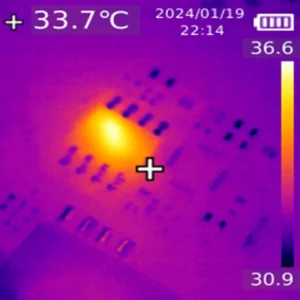
Dead laptops, laptops that turn on without display are our speciality. Here experience, a knowledge of electronics, and learning from experts worldwide comes into the mix with imported specialised tools such as a stereo trinocular microscope, linear power supply, hd thermal camera and high-powered hot air rework station.
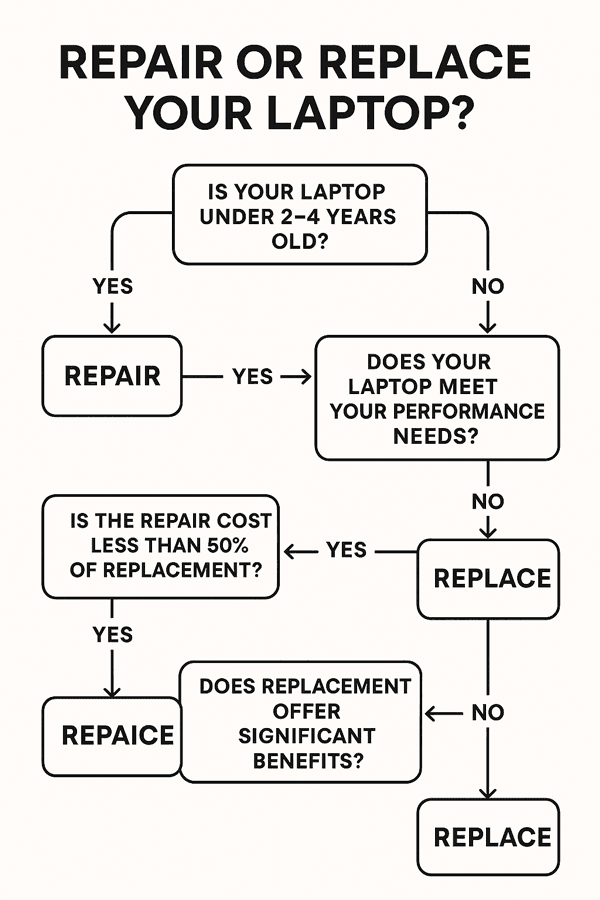
It’s still worthwhile to repair a laptop — even in 2025 — for several strong reasons that go beyond just saving money:
Cost Efficiency
Cheaper than replacement – Many common laptop failures (battery, charging port, SSD, keyboard, fan, DC jack, or even some motherboard faults) can be fixed for a fraction of the cost of buying a comparable new machine.
High-end models (e.g., MacBook Pros, ThinkPads, Dell XPS) retain value for years, so investing in a quality repair often makes financial sense.
Performance Retention
A well-maintained older laptop can match or exceed modern budget models once repaired, especially if you upgrade components (RAM, SSD) during the process.
If the machine already runs your software well, there’s no functional need to replace it.
Data Preservation
Even with cloud backups, repairing avoids the time and hassle of full system migrations, software reinstallation, and configuration.
Some repairs (like board-level fixes) can restore a device without touching your existing OS or files.
Environmental Impact
E-waste is one of the fastest-growing waste streams globally. Repairing extends your device’s life and reduces demand for new electronics manufacturing, which has a high carbon footprint.
You help conserve rare-earth materials used in circuit boards and batteries.
Reliability & Familiarity
Your current laptop is already set up exactly how you like it — keyboard feel, screen color profile, software environment — repairing it means you don’t have to adjust to new quirks.
Many older premium models are more repairable and durable than some ultra-thin modern replacements.
Supporting Right-to-Repair
Choosing repair supports local technicians and sends a market signal that consumers value serviceable products.
You’re also less dependent on manufacturer policies that sometimes push replacement over repair.
💡 Bottom line:
Repairing a laptop is not just a cost-saving choice — it’s a smart, sustainable, and often more convenient option that keeps you productive with minimal disruption.
📌 Key Insights:
High-end & workstations almost always justify repair unless parts are unavailable or tech has moved on significantly.
Mid-range laptops are the sweet spot for repair ROI — often you can get 2–4 extra years for under 30% of the replacement price.
Budget laptops are more borderline — still worth repairing for small fixes (battery, SSD), but big failures may not be cost-effective.
Our Historical Street |The History of Port Alfred, South Africa
Introduction
Port Alfred, a scenic coastal gem in South Africa’s Eastern Cape, sits at the mouth of the Kowie River — a location that has shaped its role in trade, settlement, and tourism for over two centuries. Its story is one of cultural intersection, from the indigenous Ndlambe people and early maritime ambitions to British colonial expansion and modern economic diversification. Known today for its beaches, marina, and hospitality industry, Port Alfred’s transformation has been marked by enterprise, resilience, and historical milestones — including a royal connection to Prince Alfred, second son of Queen Victoria, who visited in 1860 and after whom the town was renamed.
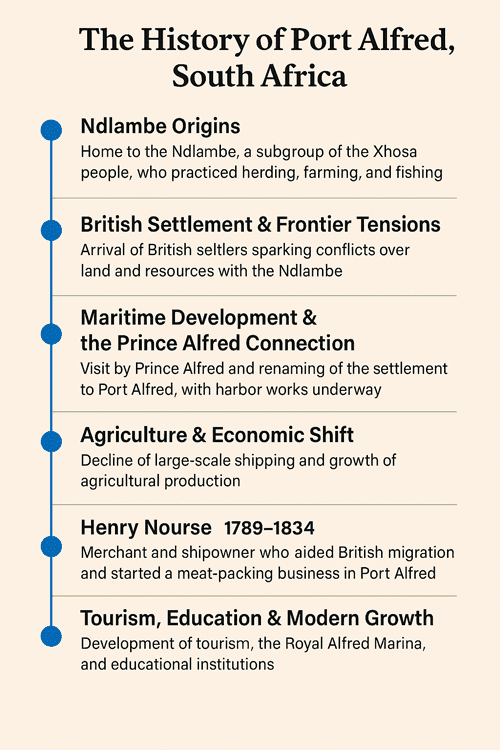
Ndlambe Origins
Before colonial settlement, the fertile lands and abundant waters of the Kowie River were home to the Ndlambe, a subgroup of the Xhosa-speaking peoples. Skilled in cattle herding, farming, and fishing, the Ndlambe maintained robust trade networks with neighbouring communities. Their culture, preserved through oral tradition, music, and social hierarchy, was deeply rooted in the land — a heritage that still forms part of Port Alfred’s identity.
British Settlement & Frontier Tensions
The 1820 arrival of roughly 4,000 British settlers marked a turning point. Encouraged by the British government to form a buffer between the Cape Colony and Xhosa territories, these newcomers brought farming expertise, craftsmanship, and commercial ambitions. They recognised the Kowie River’s potential for trade, but their presence ignited a series of frontier conflicts with the Ndlambe, as competition for resources intensified. The colonial administration’s support for settler expansion fundamentally altered the region’s social and economic landscape.
Port Alfred began as two separate settlements: Port Kowie (west bank) and Port Frances (east bank). First called Port St. Francis, the town was eventually renamed Port Alfred in 1860 in honour of Queen Victoria’s son, Prince Alfred, upon his visit.
Maritime Development & the Prince Alfred Connection
By the mid-19th century, efforts were underway to transform the Kowie River mouth into a functional harbour. Officially named Port Kowie in 1841, the settlement was renamed Port Alfred in 1860 to honour Prince Alfred’s visit — a symbolic gesture cementing its link to British imperial prestige. Harbour works, including breakwater construction, aimed to facilitate shipping and trade, but shifting sandbanks and challenging river dynamics limited its commercial capacity. Still, maritime activity remained central to local business for decades.
Emergence as a Port (1839–1890s): Man-made Harbour: In 1839, William Cock and George Hodgkinson engineered South Africa’s first man-made harbour by canalizing a new river mouth. By 1841, the stone-lined channel enabled large ships to dock safely.
Growth and Decline: From roughly 1863, up to 100 vessels docked annually. However, by the 1890s the harbour fell into disuse due to the construction of a railway to Grahamstown, which became more efficient for transport.
Agriculture & Economic Shift
As large-scale shipping waned, Port Alfred’s economy pivoted towards agriculture. The region’s fertile soils supported pineapple, chicory, and grain production, while dairy farming and cattle ranching thrived. Improved rail and road links extended market reach, enabling both settlers and indigenous communities to participate in a growing regional economy.
Railways and Infrastructure
Rail Connection: The Port Alfred Railway Line began in 1883, linking Alicedale to Grahamstown and then to Port Alfred. Passenger services were gradually reduced and eventually ceased by 1990; partial restoration (Alicedale–Grahamstown) occurred in 1995 but was suspended in 2008.
Bridges and Transit: For over 40 years, a pontoon linked the town’s east and west sides. In 1906, the foundation for the Putt Bridge was laid; it was replaced in 1989 to allow two lanes of traffic. The iconic Nico Malan Bridge (on the R72) was built in 1970.
Tourism, Education & Modern Growth
In the 20th century, Port Alfred’s natural beauty became an economic asset. Tourism boomed, fuelled by pristine beaches, river sports, and historical charm. The construction of the Royal Alfred Marina added a luxury dimension, attracting investors and boosting real estate. Education joined tourism and agriculture as a key sector, with institutions like Stenden South Africa positioning the town as a hub for hospitality management and cultural exchange.
Community Landmarks & Institutions
Royal Port Alfred Golf Club: Founded in 1907 by local figures (W. Stow, V. Vroom, G. Holloway, Dr. Jones Phillipson), the club earned its “Royal” designation and is one of only five such clubs in Africa.
The “Royal” designation is a rare and prestigious honor bestowed by the British monarch, recognizing an institution’s longstanding history, significant contributions, and ties to the Crown. In Africa, only a handful of clubs—predominantly in South Africa—have earned this distinction. Here’s a closer look at those titled institutions:
Golf Clubs in South Africa with the “Royal” Designation These four golf clubs are among the very few in Africa honored with the “Royal” prefix:
Royal Cape Golf Club (Cape Town) – Established in 1885, it is the oldest golf club in Africa. It was granted its “Royal” status in 1910 by King George V, coinciding with the Duke of Connaught’s visit for the opening of South Africa’s first Union Parliament.
Royal Port Alfred Golf Club (Eastern Cape) – Founded around 1907, this seaside links-style course received “Royal” status on 6 February 1924, following the influence and advocacy of Prince Arthur of Connaught, then serving as Governor-General of the Union of South Africa.
Royal Durban Golf Club (Durban) – Operating since 1892, this club was granted the “Royal” prefix in April 1932 by King George V, after a visit from Edward VIII (then Prince of Wales) in 1925.
Royal Johannesburg & Kensington Golf Club – Originating as Royal Johannesburg Golf Club in 1890, it merged with Kensington Golf Club in 1998. The “Royal” title was conferred in 1931 by King George V.
Other Notable Royal Clubs in South Africa Royal Cape Yacht Club (Cape Town) – Founded in 1905, this venerable yacht club received its Royal Warrant in 1914 from King George V. It remains deeply involved in sailing events, including the renowned Cape to Rio ocean race. Wikipedia
Royal Natal Yacht Club (Durban) – Established in 1858, this is the oldest yacht club in both Africa and the Southern Hemisphere. It holds the Royal title, though the exact granting date isn’t specified here.
In Summary The “Royal” title in Africa is exceedingly rare—especially among golf and yacht clubs—signifying enduring tradition, prestige, and recognition by the British monarchy. In South Africa, this honor extends to:
Golf Clubs: Royal Cape, Royal Port Alfred, Royal Durban, and Royal Johannesburg & Kensington.
Yacht Clubs: Royal Cape Yacht Club and Royal Natal Yacht Club.
Each of these institutions not only reflects historical excellence in their respective sports but also carries a symbolic connection to a bygone era of colonial ties and royal patronage.
43 Air School: Originally established as an RAF base (43 Squadron) in 1942 during WWII, it has since grown into 43 Air School, one of the world’s leading pilot training facilities.
Back then, it operated as No. 43 Air School under the Joint Air Training Scheme, a Commonwealth initiative that trained pilots and navigators for the Allied war effort. The school’s location near the coast and its generally mild flying weather made it ideal for intensive flight instruction.
After the war, the facility transitioned over the decades into a civilian aviation training institution. Today, 43 Air School is one of the largest and most respected flight training organizations in the Southern Hemisphere, offering programs for private, commercial, and airline transport pilots, as well as air traffic controllers and other aviation professionals.
Formation & Purpose
The site originated as a Royal Air Force Air Observer School (Type C) under 25 Group, later controlled by 24 Group. It officially opened on 12 January 1942, providing essential training in navigation, bombing, and gunnery. Its motto was “Werk Hard, Speel Hard” (“Work hard, play hard”), and the unit premiered a magazine titled The Drogue.
Aircraft & Training Operations
The school deployed a diverse fleet including Oxfords, Ansons, Battles, Nomads, Harts, Rearwins, Audaxes, Harvards, and Valentias. It trained hundreds of Observers and Wireless Telegraphist (W/T) Air Gunners. By mid-1943, it had produced 524 RAF-trained Observers and 53 SAAF-trained W/T Air Gunners.
Operational Role
The school wasn’t just instructional—it also served in coastal reconnaissance missions. A reserve squadron, 143 Squadron, was formed in April 1942 to operate Northrop Nomads and Ansons in reconnaissance and coastal patrol operations.
Closure and Aftermath
As water scarcity became an issue, 43 Air School moved to Grahamstown on 23 July 1945. The institution formally closed on 15 September 1946, though some flights lingered until early October. Post-war, the site was largely decommissioned and handed over to public authorities by the mid-1950s.
Royal Alfred Marina: In 1989 this scenic marina and small-boat harbour was developed by local entrepreneur Justin de Wet Steyn, revitalising the riverfront area.
Museums, Schools & Heritage
Kowie Museum: Now housed in the old railway station, the museum chronicles the local railway history and the broader heritage of Port Alfred.
It relocated to this historic building in October 2012 (or 2013), according to some sources.
The museum offers visitors a treasure trove of exhibits, including:
Histories of the 1820 British settlers,
Maritime artifacts, including ship models and stories of shipwrecks,
IsiXhosa cultural displays,
Railway memorabilia, complete with historical photographs and station-related items
Locals and visitors alike appreciate the museum’s rich storytelling:
“Fantastic little museum in the old train station building. Well kept and full of local history.”
— Tripadvisor visitor.
The station building is formally recognized as a national monument by the South African Heritage Resources Agency (SAHRA), under Gazette No. 9581, dated 8 February 1985.
However, the building has faced challenges. As part of restoration efforts, heritage advocates have raised concerns about restoring the clock tower and original roofing, and have sought information regarding the fate of the clock itself.
Richmond House (Cock’s Castle): Built around 1840 by William Cock, this imposing estate overlooks the river mouth. Rich in architectural and familial history, the site now serves as a museum and charming guest accommodation, restored with original features and historical artifacts.
Cock’s Castle (Richmond House): A Brief History
Origins & Architecture
Cock’s Castle was constructed around 1840 by The Honourable William Cock, a Cornish settler and innovative entrepreneur. He built the home atop the west bank of the Kowie River (now Port Alfred), influencing the channeling of the river and elevating regional trade. The house featured defensive elements such as crenellations, a flat roof reinforced to support small cannon, deep foundations, and even underground water storage—reflecting its dual role as both a residence and a fortress.
Name & Legacy
Over time, Richmond House earned the nickname “Cock’s Castle”—a humorous epithet first coined by Sir Bartle Frere during a gubernatorial visit—which stuck in local usage for decades
The Heritage Portal
. William Cock’s efforts were pivotal in creating South Africa’s first man-made harbor. By 1841, a stone-lined channel allowed sailing ships to dock safely, facilitating economic development of the Eastern Frontier.
Later History & Preservation
After passing through several owners over the years—including the Pote, Ohlsson, and Kelly families—the original structure fell into disrepair by 1999. Portions of it were carefully demolished, but essential architectural and cultural elements were salvaged. These were preserved and displayed in a replica structure— the Richmond House Museum and Music Room (formerly the 1940s staff quarters), situated on the same estate.
Today: The Museum & Visitor Experience
The museum houses a trove of historical artifacts: parts of the original front door (“Cross-and-Bible”), fireplaces, flagstaffs, light fittings, and beautifully crafted Edwardian décor. Illustrated panels tell the story of the Cock family and successive owners.
Outside, guests can view naval cannons, a millstone (from William Cock’s steam mill), a kitchen sink, and flagstaff remains—all relics from Cock’s era.
The museum also serves as a music venue—hosting soirees and performances under its atmospheric, heritage-filled roof.
Visits are by appointment and typically involve a donation. You can contact the curator, Sue (via the listed phone number), to arrange a private guided tour.
Education: Port Alfred High School, established in 1883, now serves nearly 1,000 students and embodies the town’s long-standing commitment to education.
Person of Interest – Prince Alfred
Prince Alfred’s Legacy in South Africa
Prince Alfred, Duke of Edinburgh, was the second son of Queen Victoria. He made historic visits to South Africa in 1860, 1867, and 1870.
During his 1860 visit, he formally initiated several projects:
Laid the foundation stone for Cape Town’s breakwater, which later became known as the Alfred Basin—an integral part of what is today the Victoria & Alfred Waterfront. .
He also inaugurated the South African Library and inspired the naming of various places in his honor, including Port Alfred and Prince Alfred Hamlet.
UCT and the “Alfred” Connection
Interestingly, despite Prince Alfred’s royal ties and historical significance in South Africa, he does not appear to have any direct connection with the University of Cape Town’s name or founding.
What UCT’s Name Is Actually Derived From:
UCT traces its origins back to the South African College, founded in 1829 as a high school in Cape Town. It evolved into a university by 1918, thanks in large part to a substantial bequest from Alfred Beit—a wealthy mining magnate..
Though the name “Alfred” appears in the Alfred Beit bequest, it refers to the donor Alfred Beit, not to Prince Alfred.
Person of Interest – Henry Nourse
Henry Nourse (1789–1834), a London wine merchant turned Cape entrepreneur, was instrumental in Port Alfred’s early development. After trade restrictions during the Napoleonic Wars disrupted his wine business, Nourse established a wine agency in Cape Town and became a vocal proponent of British settlement. His lobbying in Britain helped secure funding for the 1820 migration, and he personally transported settlers aboard his own ship to the Albany district. In Port Alfred, Nourse launched a meat-packing enterprise and acquired land on the western bank of the Kowie River — areas later integrated into the town plan. Today, his contribution is remembered in Henry Nourse Street, a lasting tribute to his entrepreneurial vision.
Born in London, England, later emigrated to South Africa, where he became a prominent businessman, sportsman, and politician. He represented South Africa at first-class level cricket, served as manager of the national team at the 1920 and 1924 Olympic Games, and founded the gold-mining company Nourse Mines, which was named after him. Historical records indicate no French heritage, with his family background and career rooted entirely in England and South Africa.
Timeline
| Era | Highlights
| Early 1820s | Settlement by British arrivals; twin towns Port Kowie & Port Frances |
| 1841 | Opening of the first man-made harbour
| 1860 | Renamed Port Alfred following royal visit
| 1883 | Railway line constructed
| 1890s | Harbour declines; railway takes precedence
| Early 20th c. | Bridges modernized, golf club founded
| 1942–Present | Development of aviation training (43 Air School)
| 1989 | Establishment of Royal Alfred Marina
| Present | Heritage sites preserved; tourism and community thrive
Conclusion
Port Alfred’s evolution — from Ndlambe heartland to British settlement, agricultural hub, maritime town, and modern tourist destination — reflects South Africa’s broader history of adaptation and reinvention. Its connection to Prince Alfred adds a royal chapter, while figures like Henry Nourse embody the entrepreneurial drive that shaped its economic foundations. Today, Port Alfred continues to blend heritage and progress, standing as both a historical landmark and a dynamic Eastern Cape community.
Port Alfred’s history is a rich tapestry woven around settlement, maritime innovation, transport evolution, and community development. From its birth as a buffer settlement of the 1820s, through its brief heyday as a bustling port, to its current status as a heritage-rich coastal town with a vibrant aviation school and recreational offerings—it has continually adapted and embraced change.

Sorin | Top UK-based Laptop Expert
Sorin, the UK-based technician behind Electronics Repair School, is a veteran with over 30 years of hands-on electronics repair experience, known for his diagnosis-first approach that focuses on fixing rather than simply replacing parts. Through his unedited, process-rich YouTube tutorials, he shares real-time troubleshooting techniques that resonate with both learners and hobbyists worldwide. Customers frequently praise his skill, transparency, and fair pricing, often crediting him with reviving devices others deemed unsalvageable, though occasional critiques note communication or reassembly issues. His mix of technical mastery and open teaching style has earned him a strong global following in the repair community.
Explore further:



DATA
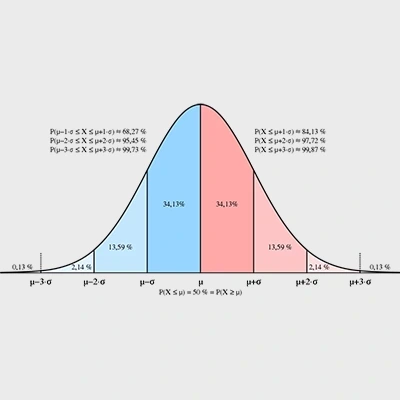
statistical services, mL and ai

We provide basic statistical services to big data analysis. Also machine learning (mL) and artificial intelligence (ai) which is based on mathematical statistics is now present in many WordPress plugins.
We offer competencies that cover advanced data analysis on traditional to big datasets. We provide our customers with managed analytic services, data science and statistics, regular and adhoc reports and predictions that have a significant impact on the bottom line of a business. This helps businesses to plan accurately and make changes to their business going forward.
Applied AI
Applied AI to develop custom WordPress security and API plugins—implementing features like Content Security Policy (CSP) to close vulnerabilities and meet Scorecard standards, and enabling product data and stock synchronization. Leveraged AI for generating wireframes to guide early design stages, enhancing CSS customization, recovering corrupted files, and providing advanced remote technical support.
DEVELOPMENT
Kadence (WordPress), Laravel
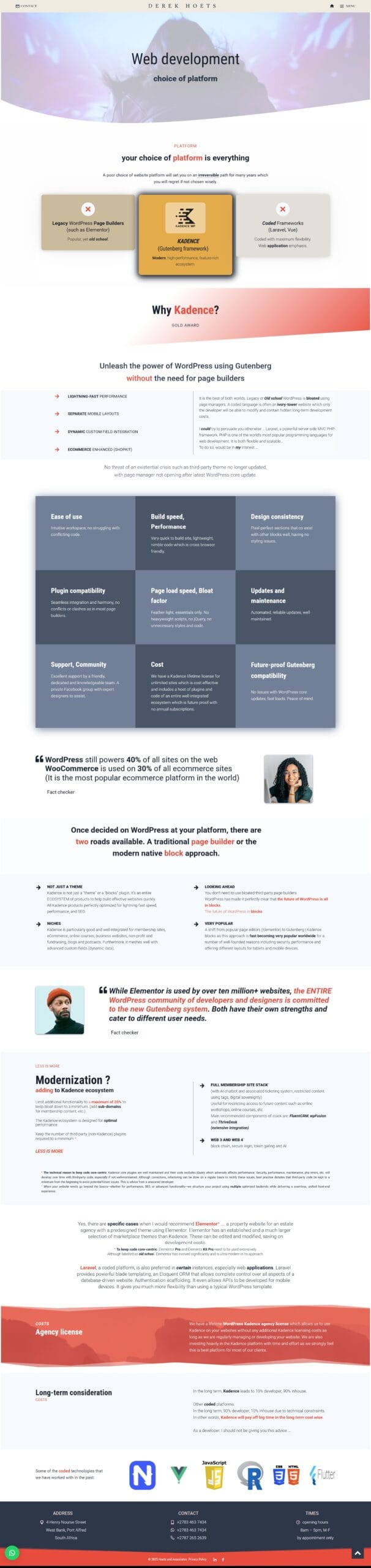
We proudly recommend Kadence (WordPress, Gutenberg enhanced) as our go-to platform for future projects—offering unmatched speed, customization, and a seamless user experience.
We focus on what matters most—standout branding, seamless UI/UX, the right platform and hosting*, powerful SEO, reliable maintenance, rock-solid security, high performance, flexible customization, mobile-centric and mobile-first layouts, eCommerce readiness, and cost-effectiveness.
modular, native, fast
Don’t Settle for Slow—Make Your WordPress Website Blazing Fast!
Google PageSpeed Insights
Google ranks fast-loading websites higher—ready to make your WordPress site outrank the competition?
Powerful, Scalable Websites Built with the Kadence Ecosystem
When your website needs go beyond the basics—whether for performance, SEO, or advanced functionality—we structure your project using multiple optimized backends while delivering a seamless, unified front-end experience.
At the core of our builds is the Kadence ecosystem: a powerful, flexible framework designed for growth. With reusable blocks, templates, and global design libraries, we create sites that are fast, beautiful, and incredibly easy to scale.
CUSTOM HANDCRAFTED SITES
Crafted by Hand
I specialize in fully custom, handcrafted designs tailored to your unique vision and needs—while also offering template-based options or hybrid solutions to suit your budget and timeline.
Enjoy:
Let’s build a smarter, more adaptable website that grows with your brand—without sacrificing speed, design, or user experience.
Gutenberg | The Way Forward
“Gutenberg” is a codename for a whole new paradigm for creating with WordPress, that aims to revolutionize the entire publishing experience as much as Johannes Gutenberg did the printed word.
Gutenberg is the future of WordPress because it transforms the editing experience into a more visual, flexible, and modular system. With its block-based approach, users can build entire websites — from posts to full layouts — using reusable, customizable blocks without needing to code. It enables full site editing (FSE), streamlining content creation, design, and customization in one unified interface. This shift aligns WordPress with modern web development trends and improves performance, accessibility, and ease of use, making it more competitive with platforms like Wix and Squarespace. Gutenberg is faster, cleaner, future-proof, and more aligned with WordPress core development, while page builders can be heavier, slower, and more reliant on third-party ecosystems. For most users and developers, Gutenberg provides a solid foundation with fewer drawbacks and more flexibility over time.
Matt Mullenweg (WordPress co-founder): “Gutenberg is not just a post editor. It’s the basis for a complete revamp of WordPress as a site builder.”
WordPress core development roadmap (by Matt Mullenweg and Automattic) has clearly prioritized Gutenberg and FSE as the central technology for WordPress moving forward. Gutenberg and FSE are not just features—they’re a strategic redefinition of what WordPress is.
Native Gutenberg is often considered better than traditional page builders (like Elementor, WPBakery, or Divi) for several key reasons:
Performance
Gutenberg is lightweight and built into WordPress core, which means fewer scripts and styles are loaded compared to bulky page builders add extra layers of CSS and JavaScript, which often result in slower page speeds.
Leads to faster page load times, better Core Web Vitals, and improved SEO. Fast-loading websites perform better in search rankings.
Clean Code Output
Gutenberg produces cleaner HTML with less nesting and fewer wrappers. Page builders often generate bloated markup, which can make pages slower and harder to debug.
Seamless Integration with WordPress Core
Since Gutenberg is officially part of WordPress, it’s more stable and future-proof. It gets regular updates and works natively with most WordPress themes and plugins.
Full Site Editing (FSE) Support
Gutenberg enables you to edit headers, footers, templates, and site structure—not just page content. Page builders typically require premium versions or add-ons for full site control.
Accessibility & Standards
Gutenberg is built with WordPress accessibility guidelines in mind. Page builders often lag behind in accessible design and semantic markup.
Better for Developers
Developers can build custom blocks using React/JS and integrate them seamlessly. Code is more maintainable and extendable than with proprietary page builder systems.
Lower Cost
Gutenberg is free and doesn’t require premium add-ons for most core functionality. Page builders often lock key features behind paywalls.
Long-Term Stability
Gutenberg is the official direction of WordPress development. Page builders may become less relevant as core WordPress continues to evolve.
Advanced Security
Gutenberg is generally better for Content Security Policy (CSP) compliance and overall security compared to traditional page builders like Elementor or Divi. CSP-Friendly, No Shortcode Obfuscation, Better for SRI and Nonce-Based CSP.
Kadence extends Gutenberg | A Big Step Forward
Kadence extends Gutenberg by adding advanced design tools, custom blocks, and layout controls that go far beyond what the default WordPress block editor offers. It enhances the page-building experience without needing a separate builder like Elementor or Divi.
Kadence turns Gutenberg into a powerful, full-page builder, combining the speed and simplicity of native WordPress with the flexibility of advanced design systems — all without third-party builders.
Kadence Blocks Pro extends the Gutenberg editor with powerful features designed for advanced site-building without bloat. It includes premium blocks like modals, sliders, image overlays, video popups, and dynamic content displays, as well as a powerful query loop builder for custom post grids. Users can apply conditional logic to show or hide content based on user roles, login state, devices, dates, or custom fields—ideal for personalization or membership sites. The Pro version also adds scroll-triggered animations, custom SVG icon support, advanced visibility controls, dynamic field integration (with ACF, Meta Box, etc.), and seamless WooCommerce enhancements. Paired with the Kadence Theme, it enables complete header/footer customization, templating via block hooks, and full design system control, making it a lightweight yet highly flexible alternative to traditional page builders.
Here’s a breakdown of how Kadence extends Gutenberg:
Custom Kadence Blocks
Kadence provides its own suite of blocks that integrate directly into the Gutenberg editor. These blocks are lightweight and responsive, following best practices for performance.
Advanced Design & Style Controls
Kadence blocks come with deeper styling options than native Gutenberg.
Global Color and Typography System
Kadence introduces a global design system. This syncs with the Kadence Theme, but works standalone too.
Responsive Controls
Unlike basic Gutenberg, Kadence allows: Device-specific settings (desktop/ tablet/mobile), Layout and visibility tweaks per device and Hide/show elements based on screen size.
Dynamic Content Support
Kadence Pro supports: Displaying dynamic content like custom fields (ACF, Meta Box, etc.), Conditional display (e.g., show block if user is logged in) and Hooked elements to inject blocks in theme areas like headers/footers.
Header/Footer & Theme Builder
With Kadence and Gutenberg combined: Build custom headers, footers, sidebars, and 404 pages using blocks and Full Site Editing (FSE) experience without switching to a block theme.
Performance-First
Kadence is known for being: Lightweight and fast-loading, Blocks are modular: only load assets for blocks you use, SEO-optimized and accessible (WCAG compliant). Conditional asset loading so only the CSS/JS needed for used blocks is loaded—ideal for speed and SEO.
Form Builder
A built-in form block allows for contact forms, newsletter signups, and more, with integration options like Mailchimp and reCAPTCHA.
Pre-Designed Templates
Kadence provides a library of professionally designed sections and starter templates that you can insert and customize directly.
AI
Kadence AI tools are designed to streamline website creation by intelligently assisting users with content generation, layout suggestions, and block configurations directly within the WordPress editor.
Animation & Scroll Effects
Kadence adds animation and scroll reveal effects, enhancing visual engagement without external libraries.
Custom Icons & SVGs
It includes an icon library and supports custom SVG uploads, letting you add scalable vector graphics directly in blocks.
WooCommerce Integration
Kadence Blocks works seamlessly with WooCommerce, offering product grids, custom add-to-cart buttons, and design options tailored for online shops.
Advanced Typography Control
Beyond global fonts, it allows per-block font settings, including Google Fonts, letter spacing, font-weight, and line-height controls. Easily add and use custom fonts across your blocks with global control.
Sticky Elements
Make sections like headers or banners stick to the top as you scroll, improving usability and conversions.
Handcrafted, Hybrid or an Off-the-shelf website | You choose
An off-the-shelf website is a pre-designed, ready-to-use website solution that allows users to quickly set up an online presence with minimal effort and cost. These websites are commonly built using platforms like Wix, Squarespace, Shopify, or pre-made WordPress themes, offering a streamlined setup process for users who may not have technical expertise or a large budget.
One of the defining characteristics of off-the-shelf websites is their use of pre-built templates. These templates dictate the overall design and layout of the site, with limited options for customization. While some visual elements can be adjusted, such as colors, fonts, and images, the core structure and functionality remain largely fixed. This approach significantly reduces development time and cost but often comes at the expense of flexibility. Custom features, integrations, or unique branding elements may be difficult—or sometimes impossible—to implement within the constraints of the template. Additionally, since these templates are widely used, it’s common for multiple businesses to have websites that look quite similar, which can dilute brand identity. Performance can also be an issue, as the shared codebase and generalized functionality are not always optimized for specific business needs.
Off-the-shelf websites are best suited for individuals or businesses with straightforward needs and limited budgets. They work well for personal blogs, portfolios, small local businesses, or startups looking to establish an online presence quickly without investing heavily in design and development. However, for companies seeking scalability, a unique brand experience, or advanced features, a custom-built website offers more long-term value and strategic advantage.
Kadence is flexible enough to offer both off-the-shelf and hand-crafted website solutions, depending on your needs and goals.
For those who need a quick and cost-effective solution, Kadence provides professionally designed starter templates that function like off-the-shelf websites. These templates are ready to use out of the box and can be easily customized with the WordPress block editor. They’re ideal for small businesses, personal sites, or those just getting started, offering beautiful designs, responsive layouts, and compatibility with popular plugins — all with minimal setup time.
At the same time, Kadence also empowers developers and designers to build fully custom, hand-crafted websites from the ground up. Its lightweight framework, extensive design controls, custom hooks, and advanced layout options make it an excellent foundation for creating unique, high-performance websites tailored to specific brand needs. Whether it’s a fully custom layout, advanced WooCommerce integration, or a completely original design system, Kadence supports it.
In short, Kadence offers the best of both worlds — a fast and easy launch with off-the-shelf options, and the creative freedom to build truly bespoke websites when needed.
What is a Bespoke Website?
A bespoke website is a fully custom-designed and custom-developed website that is built specifically to meet the unique needs, goals, and branding of a particular business or organization. Unlike off-the-shelf or template-based sites, bespoke websites are created from scratch, with every element — from layout and design to functionality and user experience — tailored to fit the client’s specific requirements.
Key Features of a Bespoke Website:
Unique Design: Crafted to reflect your brand identity, with no shared templates or generic layouts.
Custom Functionality: Built to support your exact workflows, features, and integrations — whether it’s a booking system, advanced forms, ecommerce logic, or anything else.
Optimized Performance: Designed and coded for speed, SEO, accessibility, and scalability from the ground up.
Scalability and Flexibility: Easily expandable to grow with your business needs without being limited by pre-built constraints.
Who Needs a Bespoke Website?
Bespoke websites are ideal for businesses or organizations with specific goals that cannot be effectively met by standard templates. This includes medium to large businesses, e-commerce platforms, startups with unique offerings, or anyone wanting a highly branded, competitive digital presence.
In short, a bespoke website is like having a digital space tailor-made for your business — just as a custom suit is tailored to your exact measurements, needs, and style.
Our process
Envision
Together, we assess your goals, set the scope, and establish a clear project cost.
Develop, then Design
Here, our team gets to work—starting with a key feature, with the finer details to follow—crafting, designing, and developing every step of the way.
Deploy
The final step: launching your website for all to see.


Coded technologies that we have worked with in the past: